

Beyond Amsterdam: Europe's Cycling Revolution
Amsterdam has long been the benchmark for bike-friendly cities, but a cycling revolution is now sweeping across Europe. Cities everywhere are embracing bicycles for their benefits: less traffic, cleaner air, better public health, and improved quality of life. This shift goes beyond adding bike lanes; it's a fundamental change in urban planning and a cultural embrace of cycling.
Our 2026 rankings consider factors beyond infrastructure, including safety, the strength of the cycling community, bike-sharing availability, integration with public transport, and political commitment to cycling. The goal is to identify cities where cycling is not just convenient, but the obvious choice.
The rapid pace of change is exciting. Cities are sharing ideas, trying new approaches, and adapting quickly. We're seeing innovative solutions like dedicated bike highways, traffic lights timed for cyclists ('green waves'), and secure bike parking.
This isn't about replicating the Dutch model. Each city has unique challenges and solutions. The best cities tailor their approach to their context, building community and a sense of belonging around cycling.
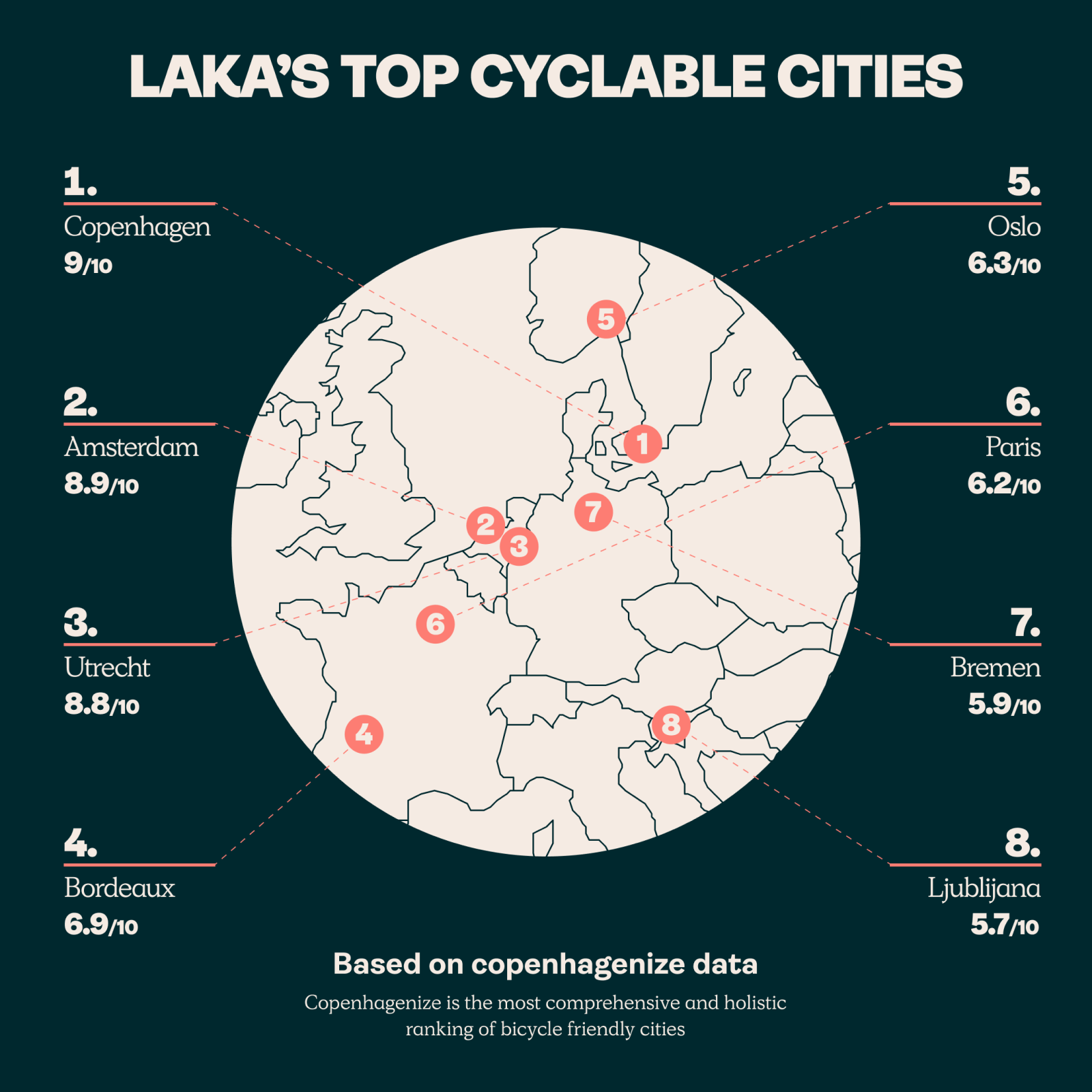
The 2026 Bike-Friendly City Rankings
Here are the top 20 bike-friendly cities in Europe for 2026, based on infrastructure, safety, community support, and cycling policy developments. While rankings can vary, this list offers a solid overview for exploring Europe by bike.
Our data includes reports from PeopleForBikes (rating infrastructure and safety), observations on community initiatives, recent investment impacts, bike theft rates, commuter cycling percentages, and feedback from online forums and social media.
A high ranking doesn't mean a city is perfect; every city has challenges and areas for improvement. These cities are leading the way in creating sustainable and enjoyable urban environments for cyclists.
- 1. Copenhagen, Denmark: A consistently top-ranked city, Copenhagen continues to invest in its cycling infrastructure, with a focus on improving safety and accessibility. The city’s extensive network of bike lanes, combined with its flat terrain and cycling culture, makes it a paradise for cyclists. Recent expansions to bike parking near train stations have further boosted its score.
- 2. Utrecht, Netherlands: Utrecht has made significant strides in recent years, becoming a true rival to Copenhagen. Its "green wave" system, which prioritizes cyclists at traffic lights, is a standout feature. The city also boasts excellent bike parking facilities and a growing network of bike highways.
- 3. Münster, Germany: Often called the "bicycle city" of Germany, Münster has a long-standing commitment to cycling. Its comprehensive bike lane network, combined with its car-free city center, makes it a very safe and pleasant place to cycle. The city continues to expand its bike-sharing schemes and promote cycling tourism.
- 4. Antwerp, Belgium: Antwerp has seen a dramatic increase in cycling in recent years, thanks to investments in bike lanes and a growing awareness of the benefits of cycling. The city’s flat terrain and compact size make it ideal for exploring by bike. They’ve also focused on integrating cycling with public transport.
- 5. Strasbourg, France: Strasbourg has a well-developed cycling infrastructure and a strong cycling culture. The city’s flat terrain and proximity to the Rhine River make it a popular destination for cyclists. Recent initiatives to promote cycling tourism have further boosted its appeal.
- 6. Bremen, Germany: Bremen’s focus on sustainable transportation has made it a leader in cycling infrastructure. The city’s bike lanes are well-maintained and clearly marked, and there are plenty of bike parking facilities. They've also implemented a successful bike-sharing program.
- 7. Ghent, Belgium: Ghent has invested heavily in cycling infrastructure in recent years, creating a network of dedicated bike lanes and pedestrian zones. The city’s compact size and flat terrain make it easy to explore by bike. They’ve also focused on reducing car traffic in the city center.
- 8. Malmö, Sweden: Malmö has a growing cycling culture and a commitment to sustainable transportation. The city’s bike lanes are well-maintained and clearly marked, and there are plenty of bike parking facilities. They’ve also invested in bike-sharing schemes.
- 9. Ljubljana, Slovenia: Ljubljana has transformed itself into a green capital, with a strong focus on cycling and pedestrian-friendly infrastructure. The city’s car-free city center and extensive network of bike lanes make it a very pleasant place to cycle.
- 10. Vienna, Austria: Vienna has a well-developed cycling infrastructure and a growing cycling culture. The city’s bike lanes are well-maintained and clearly marked, and there are plenty of bike parking facilities. They’ve also invested in bike-sharing schemes.
- 11. Berlin, Germany
- 12. Paris, France
- 13. Seville, Spain
- 14. Bologna, Italy
- 15. Barcelona, Spain
- 16. Stockholm, Sweden
- 17. Helsinki, Finland
- 18. Porto, Portugal
- 19. Valencia, Spain
- 20. Dublin, Ireland
Europe's Most Bike-Friendly Cities in 2026: Rankings
| City | Country | Overall Score (out of 100) | Infrastructure Score | Safety Score | Highlights |
|---|---|---|---|---|---|
| Utrecht | Netherlands | 93 | 95 | 90 | Extensive cycle network, high bicycle mode share, dedicated cycle parking. |
| Antwerp | Belgium | 89 | 88 | 87 | Flat terrain, growing cycle infrastructure, bicycle rental schemes. |
| Copenhagen | Denmark | 87 | 90 | 85 | Dedicated cycle lanes, cycle superhighways, bicycle culture. |
| Munich | Germany | 85 | 82 | 88 | Well-maintained bike paths, integration with public transport, cycle advocacy groups. |
| Amsterdam | Netherlands | 84 | 92 | 78 | Canal-side cycle paths, bicycle parking facilities, relaxed cycling attitude. |
| Bordeaux | France | 82 | 80 | 85 | Expanding cycle network, Véloparc bike parking, promotion of cycling tourism. |
| Ghent | Belgium | 80 | 78 | 83 | Traffic calming measures, cycle routes along waterways, focus on sustainable transport. |
| Berlin | Germany | 78 | 75 | 80 | Increasing bike lane provision, bike sharing programs, cyclist-friendly policies. |
Illustrative comparison based on the article research brief. Verify current pricing, limits, and product details in the official docs before relying on it.
Copenhagen & Utrecht: Leading the Pack
Copenhagen and Utrecht consistently rank high in bike-friendliness. Copenhagen, with decades of investment in cycling infrastructure, remains a benchmark. The city has over 400 kilometers of dedicated, traffic-separated bike lanes, and about 50% of residents cycle to work or school. Recent improvements focus on bike parking at transportation hubs.
Utrecht is rapidly closing the gap. Its innovative "green wave’ system allows cyclists to flow through intersections without stopping, making cycling more efficient and enjoyable. Utrecht has also invested heavily in multi-story ‘bike parking garages" that can hold thousands of bikes. The newest one, near the central station, opened in 2022 and holds over 6,000 bikes.
Both cities prioritize safety. Copenhagen’s bike lanes are physically separated from traffic, and Utrecht’s are brightly colored for visibility. They also prioritize pedestrian safety with clear signage and designated crossings, integrating these features into urban design.
Beyond infrastructure, both cities foster a strong cycling culture through community events, educational programs, and political advocacy. They recognize that encouraging cycling involves changing attitudes and making it the default choice for short trips. Winter cycling is also well-managed, with dedicated snow removal and cyclists accustomed to riding in all weather.
Rising Stars: Cities Making Big Changes
While Copenhagen and Utrecht lead, several cities are improving their bike-friendliness. Seville, Spain, is a prime example. In the early 2010s, Seville built over 80 kilometers of new bike lanes, transforming the city from car-dominated to a cycling haven. Cycling rates have soared.
Ljubljana, Slovenia, is another rising star. The city has embraced a "green’ agenda, prioritizing pedestrians and cyclists over cars. They’ve pedestrianized large parts of the city center and created a network of bike lanes connecting to surrounding areas. Ljubljana"s success shows the power of political will and a clear vision for a sustainable future.
Paris, France, is also making progress. The city’s "Plan Vélo" aims to create dedicated bike lanes and reduce car traffic. While progress has been slow, recent investments in bike infrastructure and growing awareness of cycling's benefits are encouraging. The Vélib’ bike-sharing scheme, one of the largest globally, has also played a key role in promoting cycling.
These cities show it's possible to transform urban environments to prioritize cycling, even with existing car-centric infrastructure. Their success stories offer lessons for other cities aiming to become more bike-friendly.
Planning Your Car-Free Trip
Planning a car-free trip to these cities is easy. Europe has an excellent public transportation network, with trains, buses, and
Once you arrive, bike rental services are readily available in most cities. Many cities have public bike-sharing schemes, such as Vélib’ in Paris and City Bikes in Copenhagen. These schemes allow you to rent a bike for short periods, making it easy to explore the city at your own pace. Private bike rental shops also offer a wider range of bikes, including electric bikes and touring bikes.
When choosing accommodation, look for bike-friendly hotels. Many hotels offer bike storage facilities and repair tools. Websites like Booking.com and Expedia allow you to filter hotels by bike-friendly amenities. Consider staying slightly outside the city center to save money, as long as it’s well-connected by public transport and bike lanes.
Navigating with bikes is generally straightforward, thanks to the well-maintained bike lanes and clear signage. Apps like Komoot and Google Maps offer bike-specific routing, taking into account bike lanes and elevation changes. Don’t worry about luggage – many hotels offer luggage storage, and some bike rental shops also provide luggage carriers.
European Cycling Cities
- Utrecht, Netherlands - Consistently ranked highly for its cycling infrastructure, including the world’s largest bicycle parking facility near the central station.
- Copenhagen, Denmark - Known for its extensive network of cycle tracks, prioritizing bikes over cars in urban planning. Features like cycle superhighways connect the city and surrounding areas.
- Antwerp, Belgium - Investing heavily in cycling infrastructure, with a focus on separated bike lanes and a bike-sharing program operated by Velo.
- Strasbourg, France - Boasts over 600km of cycle paths, making it easy to explore the city and surrounding Alsace region by bike.
- Munich, Germany - Offers a comprehensive cycling network and a bike-sharing system called MVG Rad, integrated with public transport.
- Bordeaux, France - Has significantly expanded its cycle lanes in recent years, promoting cycling as a key part of urban mobility. Offers bike rentals through VeloCité.
- Groningen, Netherlands - A university city with a high percentage of residents who cycle daily, supported by a well-maintained cycling infrastructure.
Safety First: Cycling Rules and Etiquette
Cycling rules and etiquette vary significantly across Europe. In some countries, such as Denmark and the Netherlands, cyclists have right-of-way in many situations. In others, such as Germany and France, cyclists are expected to follow traffic laws more strictly. It’s essential to familiarize yourself with the local rules before you start cycling.
Helmet laws also vary. In some countries, such as Spain and Portugal, helmets are mandatory for cyclists on certain types of roads. In others, helmets are recommended but not required. Regardless of the legal requirements, wearing a helmet is always a good idea.
Be aware of your surroundings and pay attention to traffic signals. Use hand signals to indicate your intentions, and make eye contact with drivers and pedestrians. Remember that drivers may not be accustomed to seeing cyclists, so be extra cautious. Always lock your bike securely when you leave it unattended, as bike theft is a common problem in many cities.
A common courtesy is to use a bell to alert pedestrians and other cyclists of your presence. Avoid cycling on sidewalks, as this is often prohibited. Be respectful of pedestrians and give them plenty of space. Understanding these nuances will significantly improve your cycling experience and safety.
Beyond the City: Bike Touring Routes
Europe is a paradise for bike touring, with a vast network of dedicated bike routes. The Danube Cycle Path is one of the most popular routes, following the course of the Danube River through ten countries. It’s relatively flat and well-maintained, making it suitable for cyclists of all levels. The route is approximately 2,850 kilometers long, but you can cycle shorter sections.
The EuroVelo network is another excellent resource for bike touring. It consists of 17 long-distance cycle routes that crisscross Europe, covering a total of over 70,000 kilometers. Several of the bike-friendly cities we’ve highlighted are located along EuroVelo routes, making them ideal starting or ending points for your tour.
The Loire Valley Cycle Route in France is a scenic route that follows the Loire River, passing through picturesque towns and vineyards. The route is approximately 800 kilometers long and offers a mix of flat and hilly terrain. For a more challenging tour, consider the Alpine Passes Cycle Route, which takes you through some of the most stunning mountain scenery in Europe.
Accommodation options along these routes range from campsites and guesthouses to hotels and bed and breakfasts. Many tour operators offer guided bike tours, which can take care of all the logistics for you.
Community Voices: Cyclists Share Their Experiences
“Cycling in Copenhagen is just… effortless,” says Sarah Miller, a tourist from the US. “The infrastructure is amazing, and everyone is so respectful of cyclists. It’s a completely different experience than cycling back home.”
Mark Janssen, a resident of Utrecht, adds, “The green wave system is brilliant. It really makes a difference to your commute. And the bike parking garages are a lifesaver – no more worrying about your bike being stolen.”
A poster on a cycling forum described Seville as “a revelation.” “I was amazed by how much the city has changed in such a short time. The bike lanes are fantastic, and the city feels so much more livable now.”
These voices reflect the growing enthusiasm for cycling in Europe. It’s not just about the infrastructure; it’s about the sense of community and the freedom that cycling provides. These cities are showing the world that a car-free lifestyle is not only possible but also desirable.


No comments yet. Be the first to share your thoughts!