

The case for leaving the car behind
I've spent nights waking up to the tide and mornings watching the sun hit the Atlantic without ever touching a steering wheel. Most people assume a car is a prerequisite for beach camping, but ditching the vehicle changes how you see the coast.
For starters, ditching the car significantly reduces your environmental impact. Sustainable travel isn't just a buzzword; it's a necessity, and choosing public transport or a combination of trains, buses, and ferries is a concrete step in the right direction. It also often saves money. Gas, parking, and vehicle wear and tear add up quickly. Then there’s the access factor. Some of the most beautiful, secluded beaches are simply inaccessible by car, requiring a bit of extra effort to reach via public transit.
Planning a car-free trip forces a slower pace. You end up talking to bus drivers and finding small shops you'd usually blow past at 60 mph. It isn't always convenient, but the lack of traffic jams and parking fees makes the logistics worth the hassle.
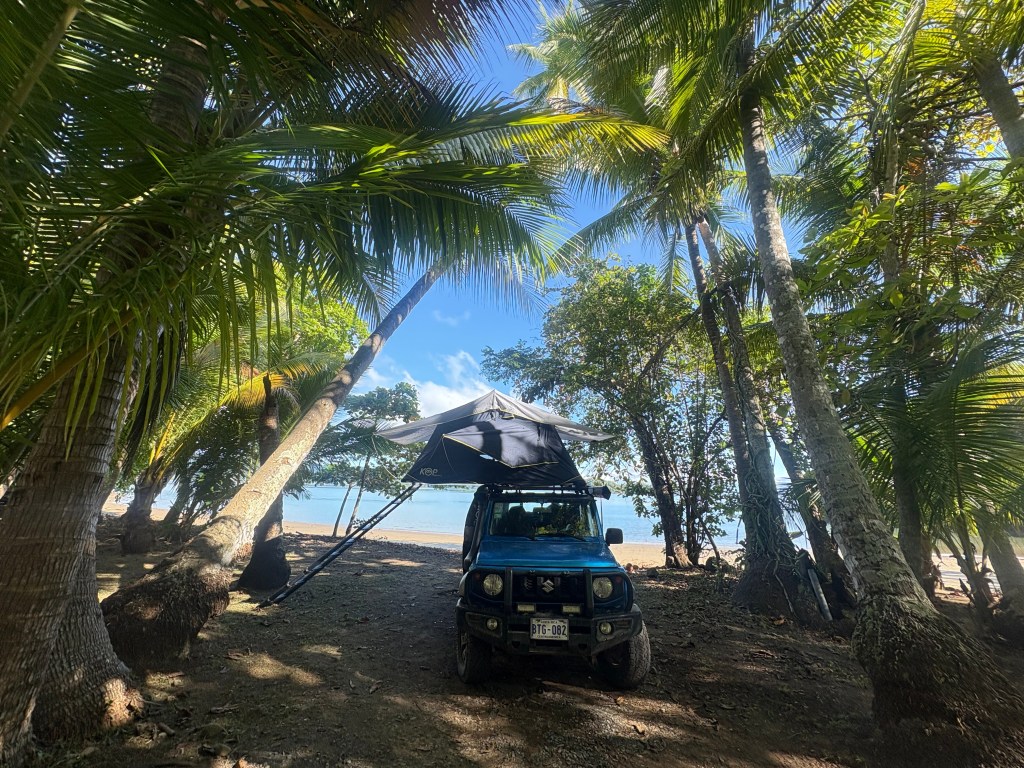
12 coastal spots you can reach by bus or train
Here are twelve beach camping destinations that are realistically accessible without a car, varying in difficulty and remoteness. I’ve included details about transportation, permits, and nearby amenities to help you plan. Difficulty ratings are based on the public transport journey itself – 'easy' means frequent, direct routes, while 'challenging' involves multiple transfers and longer travel times.
1. Assateague Island National Seashore, Maryland/Virginia (Easy): Famous for its wild horses, Assateague is accessible by bus from several towns on the Delmarva Peninsula. Camping permits are required and can be reserved through Recreation.gov. Chincoteague, Virginia, offers grocery stores and restaurants.
2. Montauk Point State Park, New York (Moderate): Reachable by the Long Island Rail Road from New York City, Montauk offers stunning cliffs and beaches. The campground requires reservations. Montauk town provides ample dining and shopping options.
3. Sandy Hook, New Jersey (Easy): A short ferry ride from Manhattan, Sandy Hook offers beautiful beaches and historic sites. Camping permits are available through Recreation.gov. There are limited amenities on the island itself, but nearby Highlands, New Jersey, has shops and restaurants.
4. Outer Banks, North Carolina (Moderate): Several towns along the Outer Banks are served by Greyhound bus lines. Camping is available at Cape Hatteras National Seashore, requiring reservations. Grocery stores and restaurants are available in towns like Manteo and Nags Head.
5. Padre Island National Seashore, Texas (Challenging): While truck camping is popular here (as seen on YouTube channels like Relaxing beach truck camping an island), you can reach Corpus Christi by bus and then take a local taxi or rideshare to the park entrance. Permits are required for beach camping. Amenities are limited within the park.
6. Pismo State Beach, California (Moderate): Accessible by Amtrak train to Grover Beach and then a short rideshare, Pismo Beach offers classic California beach camping. Reservations are essential. Grover Beach and Pismo Beach have plenty of restaurants and shops.
7. Carpinteria State Beach, California (Moderate): Reachable by Amtrak to Carpinteria station, this beach offers a sheltered cove and family-friendly camping. Reservations are a must. The town of Carpinteria has grocery stores and restaurants.
8. Morro Bay State Park, California (Moderate): Amtrak serves San Luis Obispo, from where you can take a bus to Morro Bay. The park offers camping with views of Morro Rock. Morro Bay town has plenty of services.
9. Olympic National Park, Washington (Challenging): While the park is vast, several coastal areas are accessible by bus from Seattle or Tacoma. Kalaloch Campground is a popular option, requiring reservations. Forks, Washington, is the nearest town with amenities.
10. Cannon Beach, Oregon (Moderate): Greyhound bus service reaches Seaside, Oregon, a short distance from Cannon Beach. Camping is available at nearby state parks, requiring reservations. Seaside and Cannon Beach offer a range of restaurants and shops.
11. Rialto Beach, Washington (Challenging): Similar to other Olympic National Park locations, Rialto Beach is accessible by bus and then a potentially lengthy walk. Wild camping is permitted with a wilderness permit, adding to the adventure.
12. Ostend, Belgium (Easy): For an international option, Ostend is easily reachable by train from Brussels and other European cities. Camping sites are available near the beach, offering a different beach camping experience.
Packing light for the transit commute
When you're relying on public transport, every ounce counts. The goal is to minimize weight and bulk without sacrificing comfort or safety. Think backpacking-style tents – lightweight and compact – over larger, heavier options. A two-person tent designed for backpacking can often comfortably fit one person and their gear.
Sleeping bags should also be lightweight and compressible. Down-filled bags offer the best warmth-to-weight ratio, but synthetic options are more affordable and perform better when wet. Consider a multi-use sleeping pad that can also serve as a seat. Multi-use gear is your friend. A camp towel that doubles as a blanket, a spork instead of separate utensils – these small choices add up.
How you carry everything is just as important. A comfortable backpack with a good suspension system is essential. For shorter distances from transit stops to the campsite, consider a folding wagon or a wheeled backpack. Packing food and water is particularly crucial for more remote locations, as resupply options may be limited. Prioritize non-perishable items and a water filter or purification tablets.
- Backpacking tent under 5 lbs
- Lightweight sleeping bag (down or synthetic)
- Multi-use sleeping pad
- Camp towel/blanket
- Multi-tool or knife
- Headlamp or flashlight
- Water filter or purification tablets
- Non-perishable food
- First-aid kit
Permits and leaving no trace
Many beach camping locations require permits, especially during peak season. Failure to obtain the necessary permits can result in fines or being asked to leave. For example, Los Angeles County beaches require a Beach Camp Use Permit (beaches.lacounty.gov) for overnight stays. Always check the specific regulations for the area you’re visiting.
Equally important is adhering to Leave No Trace principles. Pack out everything you pack in, including trash, food scraps, and toilet paper. Minimize your campfire impact by using established fire rings or camp stoves. Respect wildlife by observing from a distance and avoiding feeding them. Be mindful of fragile dune ecosystems and avoid walking or camping on them.
The Leave No Trace Center for Outdoor Ethics (lnt.org) is an excellent resource for learning more about responsible outdoor recreation. Remember, we’re guests in these environments, and it’s our responsibility to protect them for future generations.
Apps to help you navigate
Planning public transport routes can seem daunting, but several apps and websites can simplify the process. Google Maps is a reliable starting point, offering transit directions for many locations. Citymapper is particularly useful in major cities, providing real-time information on bus and train schedules. Transit is another popular app with a clean interface and comprehensive coverage.
Don’t forget to check the website of the regional transit authority for the area you’re visiting. These websites often provide the most accurate and up-to-date information on schedules, fares, and service alerts. It’s always a good idea to check for any planned disruptions or delays before you travel.
Having a backup plan is also essential. Public transport can be unpredictable, and delays or cancellations can happen. Knowing alternative routes or having a rideshare app installed can save you a lot of stress.
Transit Apps for Beach Camping
| App Name | Coverage Area | Real-Time Information | Offline Maps | Route Planning for Multi-Modal Trips |
|---|---|---|---|---|
| Google Maps | Global, with strong US coverage | Generally good, varies by location | Available for downloaded areas | Excellent, integrates many transport types |
| Citymapper | Major metropolitan areas, limited rural coverage | Very good in supported cities | Limited offline functionality | Strong focus on public transit, good for complex routes |
| Transit | North America & Europe, expanding coverage | Good, emphasizes accuracy | Available for downloaded schedules | Solid, prioritizes simplicity and speed |
| Moovit | 93 countries, 3100+ cities | Good, user-reported updates contribute | Offline access to trip plans | Comprehensive, includes community-based information |
| OneBusAway | Primarily US West Coast (Seattle, Portland, San Francisco) | Excellent for supported agencies | Limited | Designed for bus tracking, less useful for broader trips |
| Via | Select cities with on-demand transit | Real-time vehicle location | Not a primary feature | Focuses on booking and tracking Via rides |
Qualitative comparison based on the article research brief. Confirm current product details in the official docs before making implementation choices.
Safety First: Staying Aware on the Coast
Beach camping without a car requires extra attention to safety. Be aware of potential hazards like tides, currents, and wildlife. Check the tide charts before setting up camp and avoid camping too close to the water’s edge. Be cautious of strong currents when swimming or wading.
Always let someone know your plans, including your destination, route, and expected return time. Carry a fully charged cell phone and a portable power bank. Pack a comprehensive first-aid kit and know how to use it. Be aware of your surroundings and keep your belongings secure, especially when traveling on public transport.
Weather conditions can change rapidly on the coast. Check the forecast before you go and be prepared for rain, wind, or cold temperatures. Bringing layers of clothing is always a good idea.
No comments yet. Be the first to share your thoughts!